Four-stage life cycle

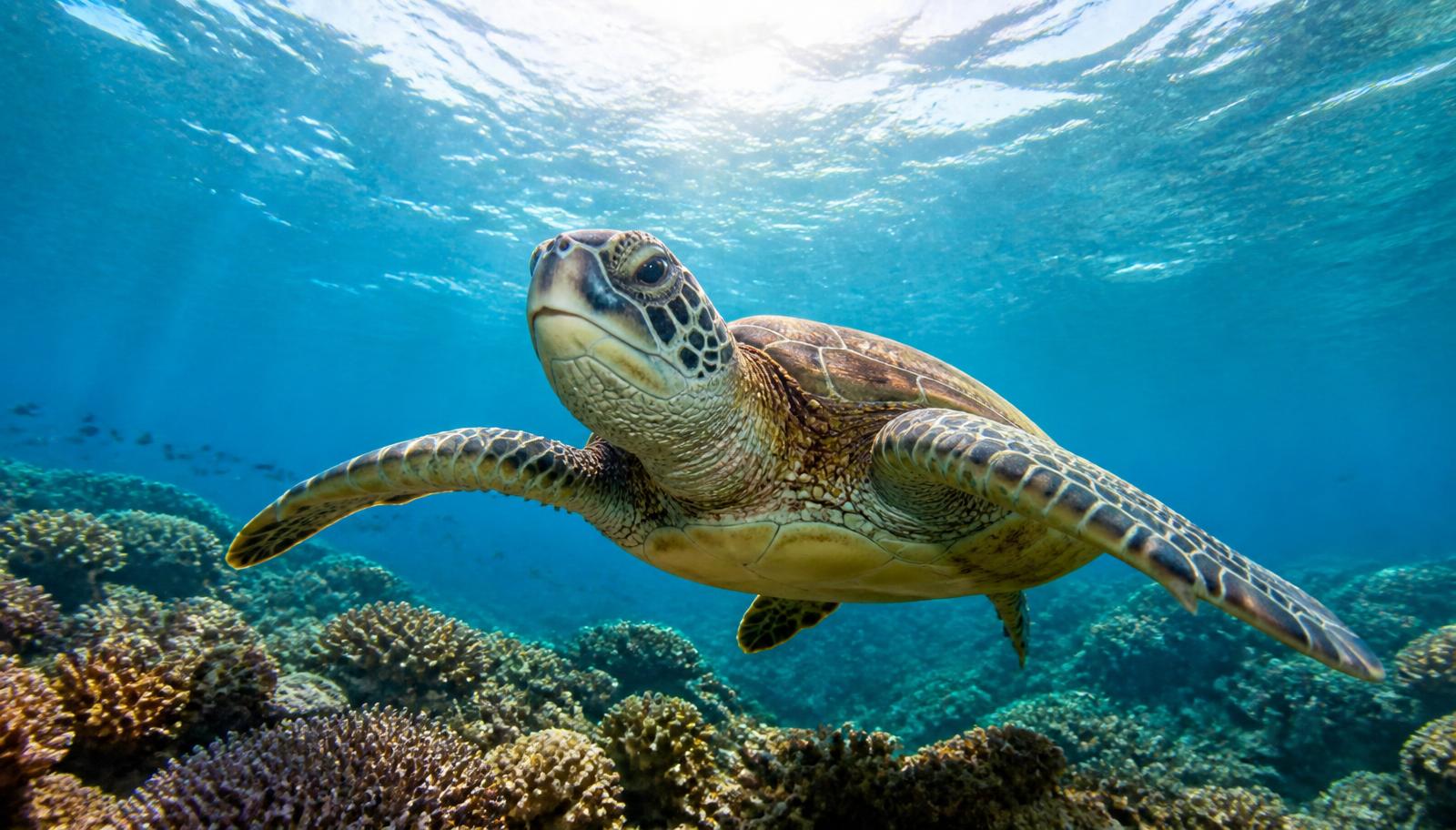
Sea turtle

The great ocean traveller

A marine reptile of the order Testudines (superfamily Chelonioidea), the sea turtle returns to nest on the very beach where it was born.

Life cycle (4 stages)

01

Eggs

Females come ashore to lay their eggs in a nest. Incubation lasts 45 to 70 days.

02

Hatchling

Hatchlings emerge from the nest and head for the ocean.

03

Juvenile

Juveniles grow in coastal waters and the open ocean for several years.

04

Adult

Adults return to coastal waters to feed and migrate, reaching maturity between 15 and 50 years.

Physical changes

  • Hatch as tiny hatchlings less than 5 cm long.
  • Grow rapidly during the first years.
  • The shell hardens and body size increases with age.
  • Reach sexual maturity between 15 and 50 years depending on the species.

Habitat

  • Tropical and subtropical oceans
  • Coral reefs
  • Seagrass beds
  • Coastal waters
  • Open ocean

Diet

  • Seagrass and algae
  • Jellyfish
  • Sponges
  • Crustaceans
  • Fish

Survival adaptations

  • Streamlined body for efficient swimming.
  • Powerful front flippers for long-distance travel.
  • Hard shell protecting vital organs.
  • Excellent sense of orientation.
  • Able to hold their breath for long periods.

Ecological importance

  • Keeping seagrass beds healthy
  • Controlling jellyfish populations
  • Supporting marine biodiversity
  • Contributing to marine ecosystem balance

Importance

  • Type : Reptiles (order Testudines, superfamily Chelonioidea)
  • Habitat shift : Eggs on the beach → Coastal waters → Open ocean → Return to nesting beaches
  • Role : Herbivores or carnivores depending on the species, key to marine ecosystem health.
  • Contribute to ocean health and are excellent indicators of environmental quality.

Did you know?

Sea turtles can travel thousands of kilometres and some females return to the exact beach where they were born to lay their eggs!

Original page