Four-stage life cycle

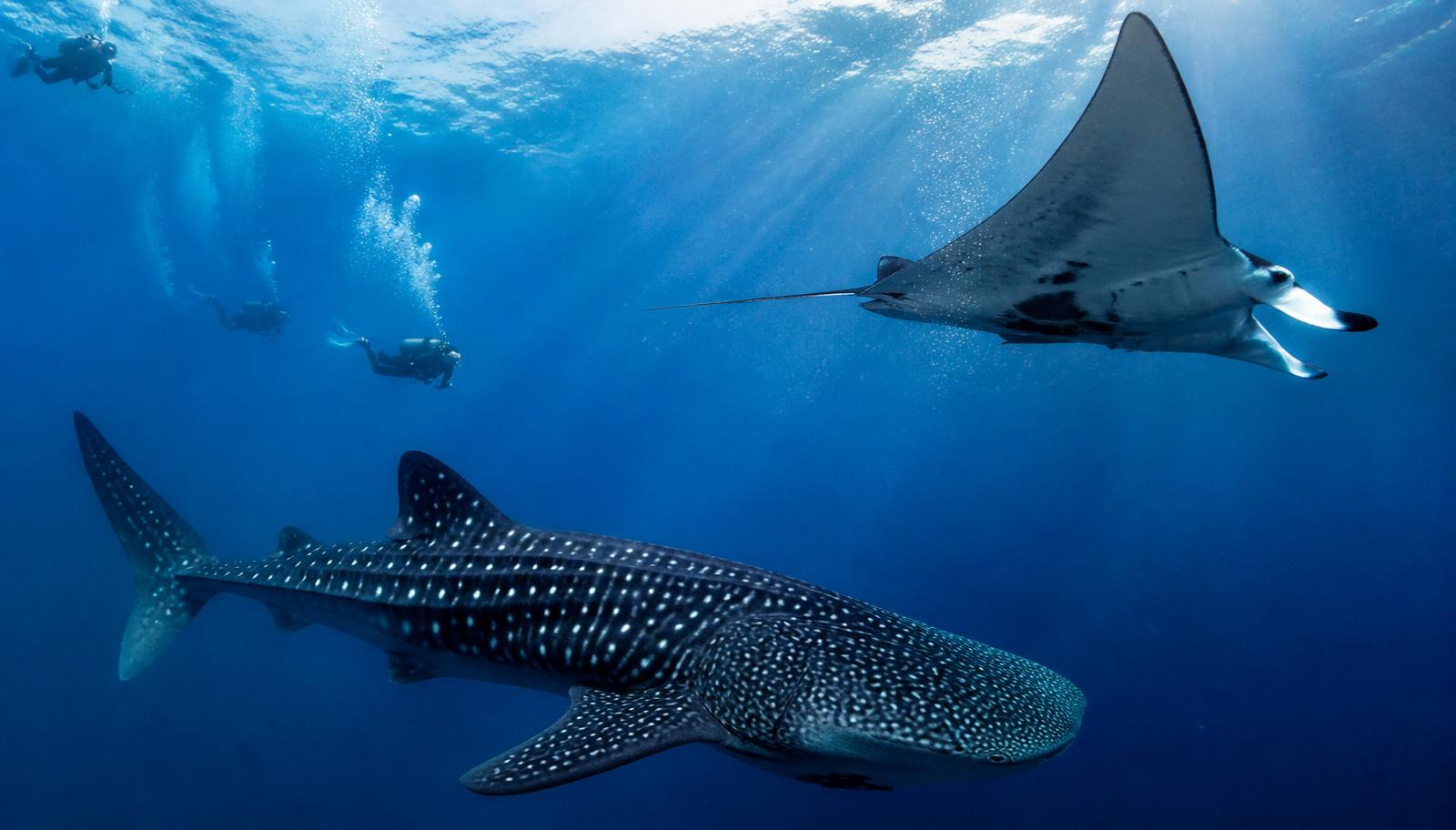
Manta ray

A gentle giant of the oceans

A cartilaginous fish of the Mobulidae family, the manta ray is ovoviviparous: the pup develops inside an egg within the mother and is born alive.

Life cycle (4 stages)

01

Birth

The pup is born alive after a long gestation of about 12 to 13 months.

02

Baby manta

The young swims immediately and starts feeding on plankton.

03

Juvenile manta

It grows slowly over several years before reaching sexual maturity.

04

Adult manta

It breeds, undertakes long migrations and can live for several decades.

Physical changes

  • The pup is born fully formed and able to swim.
  • The pectoral fins widen as it grows.
  • The wingspan increases gradually to several metres.
  • Sexual maturity is reached between 8 and 15 years depending on the species.

Habitat

  • Tropical oceans
  • Subtropical oceans
  • Coral reefs
  • Lagoons
  • Plankton-rich coastal waters
  • Open ocean zones

Diet

  • Plankton
  • Krill
  • Small crustaceans
  • Fish larvae
  • Fish eggs
  • Small marine organisms

Survival adaptations

  • Huge pectoral fins allowing very efficient underwater flight.
  • Large cephalic fins that funnel food towards the mouth.
  • Wide mouth adapted to filter feeding.
  • Tough skin and excellent eyesight.
  • Highly developed brain for a cartilaginous fish.

Ecological importance

  • Maintaining the balance of marine ecosystems
  • Regulating plankton populations
  • Supporting ocean biodiversity
  • Driving ecotourism in many regions

Importance

  • Type : Cartilaginous fish (Mobulidae family)
  • Habitat shift : Birth → Lagoons and reefs → Open ocean → Breeding areas
  • Role : Major plankton filter feeder and keystone species of marine ecosystems.
  • Contributes to ocean health and is an excellent indicator of marine environmental quality.

Did you know?

Manta rays can travel several hundred kilometres during their migrations and some reach a wingspan of more than 7 metres!

Original page