Four-stage life cycle

Trumpetfish

A very slender fish with a long tubular snout

Long and thin like a twig, the trumpetfish hunts by sliding along sea fans or hiding behind larger fish.

Life cycle (4 stages)

01

Eggs

Released in open water, they join the surface plankton.

02

Larva

Elongated larvae drift for several weeks before reaching the reef.

03

Juvenile

The young hides vertically among sea fans and branching corals.

04

Adult

It hunts by ambush on the reef, often motionless in an oblique position.

Physical changes

  • Extremely elongated body reaching up to 80 cm.
  • Tubular snout ending in a small extensible mouth.
  • Variable colouring: brown, green or bright yellow.
  • Able to change shade within seconds.

Habitat

  • Coral reefs
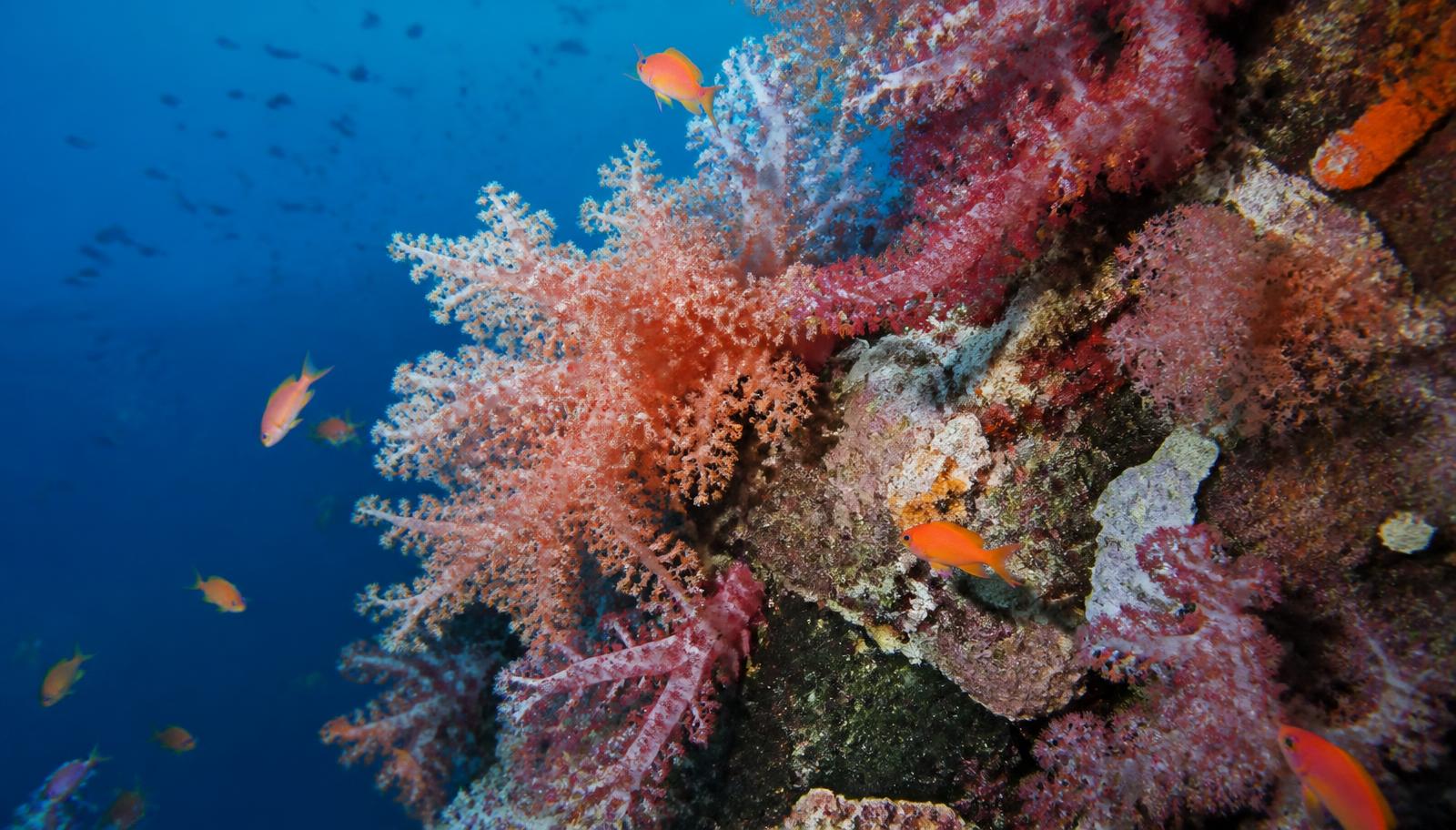
  • Sea fans and soft corals
  • Seagrass beds
  • Reef slopes

Diet

  • Small fish
  • Shrimps
  • Small crustaceans

Survival adaptations

  • Vertical camouflage among coral branches.
  • Hunting by shadowing a herbivorous fish to approach prey.
  • Very fast suction through the tubular snout.
  • Colour change to blend into the surroundings.

Ecological importance

  • Regulating small fish populations
  • Filling a discreet predator niche
  • Adding complexity to the reef food web

Importance

  • Type : Reef bony fish (Aulostomidae family)
  • Habitat shift : Pelagic eggs → Planktonic larvae → Juveniles hidden in sea fans → Hunting adults
  • Role : Stealth predator specialised in camouflaged approach.
  • Its presence indicates a structured reef, rich in shelters and prey.

Did you know?

The trumpetfish practises shadow stalking: it hugs the back of a parrotfish to approach its prey unseen.