Four-stage life cycle

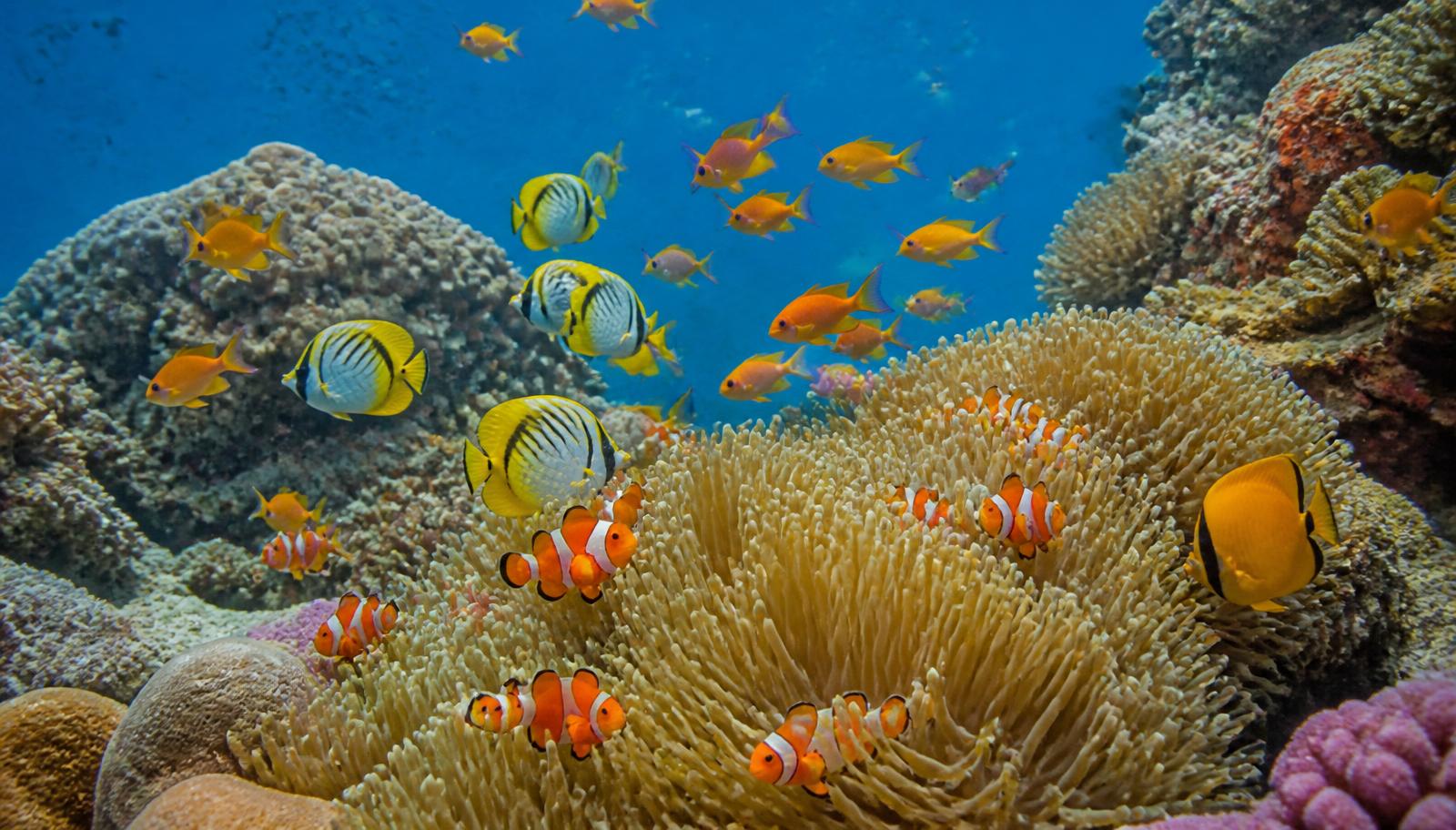
Butterflyfish

A flat fish with strikingly visible patterns

An emblem of coral reefs, the butterflyfish often lives in a faithful pair and feeds on coral polyps.

Life cycle (4 stages)

01

Eggs

Released in open water at dusk, they are pelagic.

02

Larva

A tholichthys larva, protected by bony plates, drifting for several weeks.

03

Juvenile

The young settles in the reef and often displays a deceptive eyespot.

04

Adult

It forms a lasting pair and defends a coral territory.

Physical changes

  • Very flat, rounded body, ideal for slipping between coral branches.
  • Elongated snout to reach polyps.
  • Black band masking the eye and a false eye near the tail.
  • Highly contrasted yellow, white and black patterns.

Habitat

  • Coral reefs
  • Lagoons
  • Outer slopes
  • Clear shallow waters

Diet

  • Coral polyps
  • Small invertebrates
  • Tube worms
  • Algae
  • Zooplankton

Survival adaptations

  • Fine snout to pick inside crevices.
  • Eyespot near the tail diverting attacks.
  • Living in pairs to watch the territory together.
  • Flat body giving great manoeuvrability.

Ecological importance

  • Regulating the growth of certain corals
  • Acting as a bio-indicator of reef health
  • Feeding reef predators

Importance

  • Type : Reef bony fish (Chaetodontidae family)
  • Habitat shift : Pelagic eggs → Tholichthys larva → Reef juvenile → Territorial paired adult
  • Role : Coral specialist and reef sentinel.
  • Scientists count butterflyfish to assess reef health: their decline announces reef degradation.

Did you know?

Many butterflyfish stay paired for life and always swim within a few centimetres of each other.