Four-stage life cycle

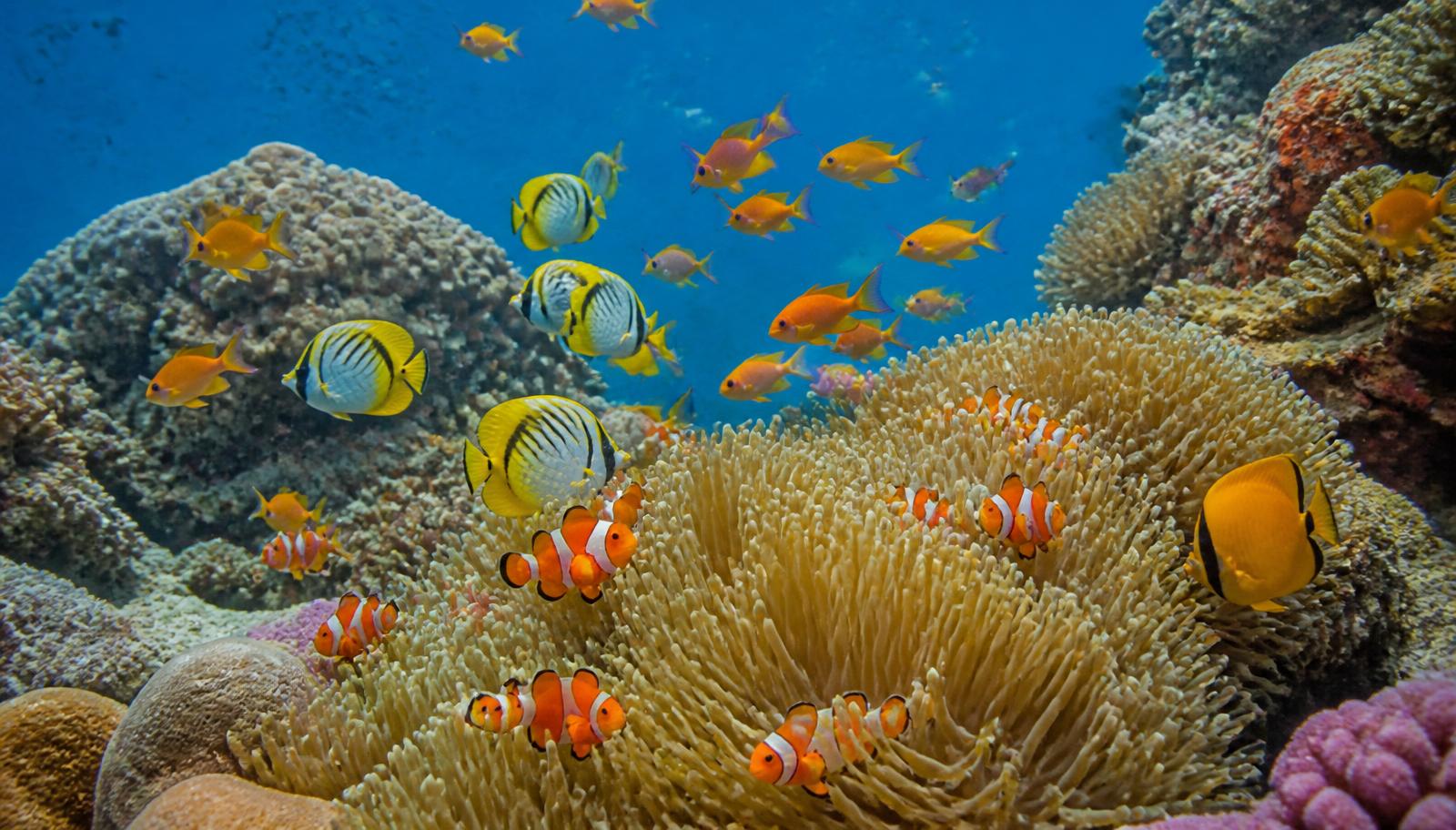
Clownfish

A small orange and white fish living in anemones

The clownfish lives in symbiosis with the sea anemone: it is protected by its stinging tentacles and defends it in return.

Life cycle (4 stages)

01

Eggs

Laid on a hard surface at the foot of the anemone and guarded by the male.

02

Larva

Larvae hatch at night and drift one to two weeks in the plankton.

03

Juvenile

The young searches for a host anemone and gradually acclimatises to it.

04

Adult

It joins a strict hierarchy: a dominant female, a breeding male and juveniles.

Physical changes

  • Orange, red or brown body with white bars depending on the species.
  • Protective mucus preventing the anemone's stinging cells from firing.
  • Small size, from 7 to 17 cm.
  • All are born male: the dominant one becomes female if she disappears.

Habitat

  • Sea anemones
  • Shallow coral reefs
  • Sheltered lagoons
  • Tropical Indo-Pacific

Diet

  • Zooplankton
  • Small crustaceans
  • Algae
  • Leftovers from the anemone's prey

Survival adaptations

  • Mucus giving immunity to the anemone's venom.
  • Highly aggressive territorial behaviour despite its size.
  • Ventilating the anemone with fin beats.
  • Protandrous hermaphroditism securing pair reproduction.

Ecological importance

  • Protecting and oxygenating its host anemone
  • Chasing away butterflyfish that eat anemones
  • Contributing to the balance of reef communities

Importance

  • Type : Symbiotic bony fish (Amphiprioninae subfamily)
  • Habitat shift : Eggs on the reef → Planktonic larvae → Search for an anemone → Adult life in the anemone
  • Role : Indispensable partner of the anemone in a mutualistic symbiosis.
  • Highly sought after by the aquarium trade and threatened by anemone bleaching: a direct indicator of thermal stress.

Did you know?

All clownfish are born male; when the dominant female disappears, the largest male changes sex to replace her.