Four-stage life cycle

Angelfish

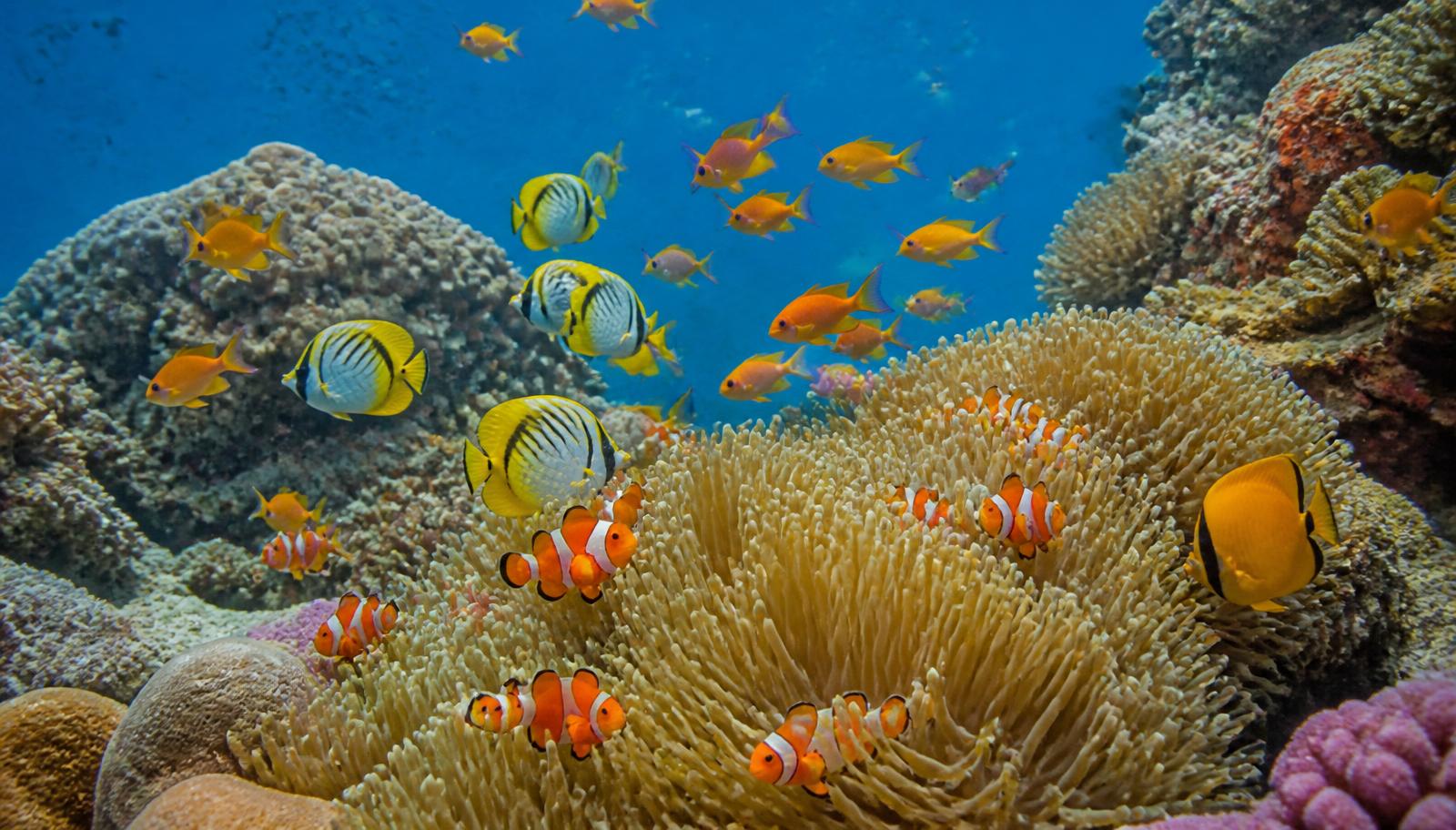
The vivid colour of the reef

A reef bony fish, the angelfish often changes livery dramatically between the juvenile and adult stages.

Life cycle (4 stages)

01

Eggs

Laid by the female on hard surfaces: rocks, corals, sponges.

02

Larva

Larvae hatch and drift in the plankton for a few days.

03

Juvenile

Young fish settle on the reef and start changing colour.

04

Adult

It reaches maturity and lives in pairs or small groups on the reef.

Physical changes

  • Eggs are transparent and sticky.
  • Larvae are tiny and translucent.
  • Juveniles develop their characteristic colours and patterns.
  • Adults display bright colours and unique patterns depending on the species.

Habitat

  • Tropical coral reefs
  • Shallow lagoon waters
  • Outer reef slopes

Diet

  • Sponges
  • Algae
  • Coral polyps
  • Small invertebrates

Survival adaptations

  • Bright colours to hide or communicate.
  • Agile fins for navigating the reef.
  • Some species change colour as they grow.
  • Well-developed senses to find food and escape predators.

Ecological importance

  • Controlling algae and sponges on reefs
  • Contributing to marine ecosystem balance
  • Indicating good reef health

Importance

  • Type : Reef bony fish
  • Habitat shift : Eggs attached to the reef → Larvae in open water → Young on the reef → Territorial adults
  • Role : Helps maintain reef balance and species diversity.
  • Essential for reef health and marine biodiversity.

Did you know?

Angelfish add to the beauty and the health of coral reefs. Let's protect them!

Original page