Four-stage life cycle

Seahorse

The only fish where the male carries the young

A small marine fish with a unique shape, the seahorse swims upright and grips sea fans with its prehensile tail.

Life cycle (4 stages)

01

Eggs

The female deposits her eggs in the male's belly pouch.

02

Male gestation

The male incubates the eggs for two to four weeks.

03

Juvenile

Hundreds of perfectly formed young are released and live in the plankton.

04

Adult

It settles on a small territory and often forms a faithful pair.

Physical changes

  • Body covered with bony plates instead of scales.
  • Prehensile tail with no caudal fin.
  • Tubular snout used to suck up prey.
  • Eyes that move independently of each other.

Habitat

  • Seagrass beds
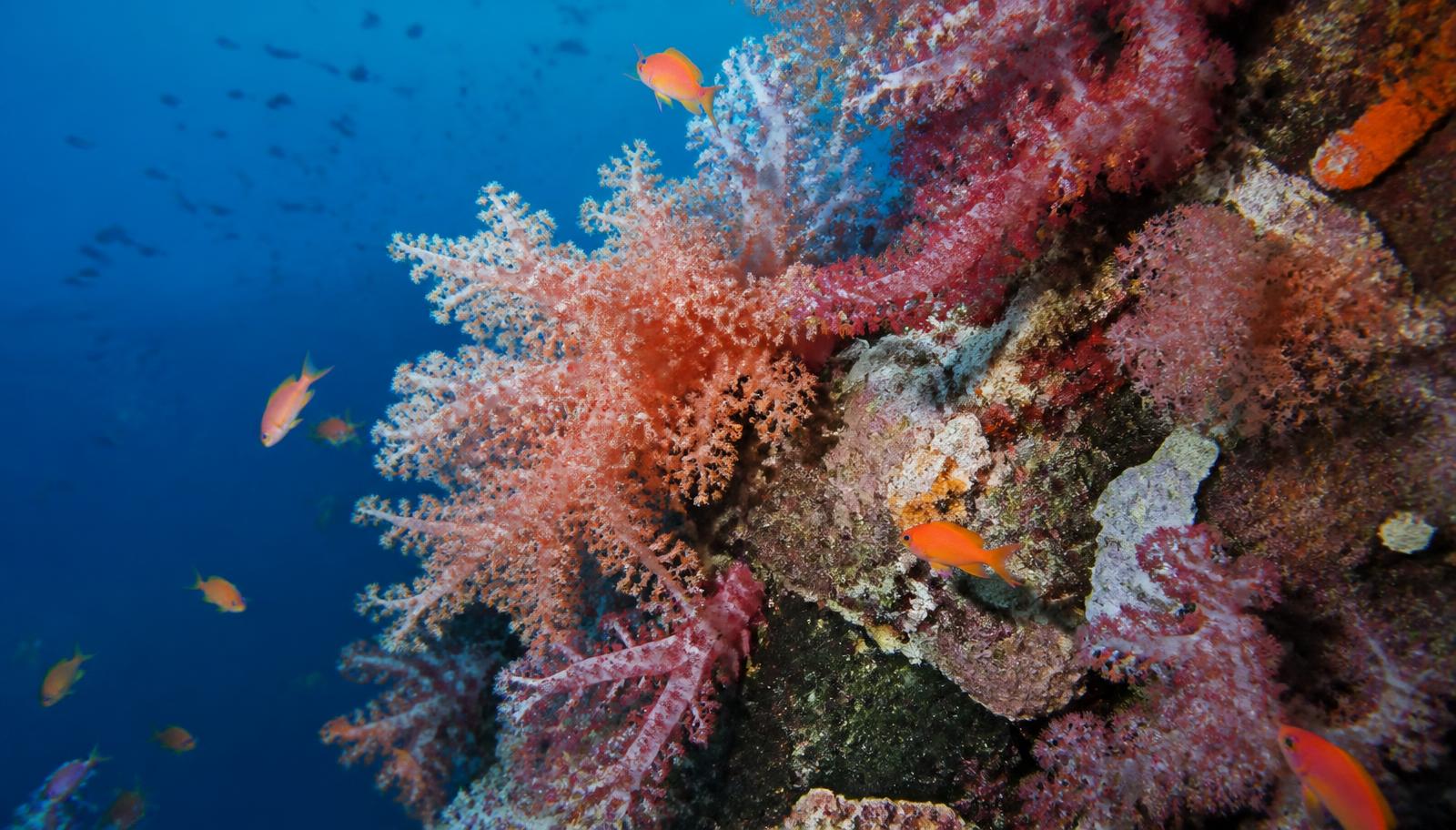
  • Sea fans and soft corals
  • Mangroves
  • Shallow coastal waters

Diet

  • Small crustaceans
  • Copepods
  • Shrimp larvae
  • Zooplankton

Survival adaptations

  • Remarkable camouflage, some species mimicking their host sea fan.
  • Lightning-fast suction of prey through the snout.
  • Prehensile tail to resist the current.
  • Male gestation protecting eggs from predators.

Ecological importance

  • Regulating small crustacean populations
  • Indicating the quality of seagrass beds and reefs
  • Supporting coastal biodiversity

Importance

  • Type : Bony fish (Syngnathidae family)
  • Habitat shift : Male's pouch → Coastal plankton → Seagrass and sea fans → Adult territory
  • Role : Discreet predator of micro-crustaceans and sentinel species of coastal habitats.
  • Highly sensitive to seagrass destruction and the aquarium trade: its presence signals a healthy environment.

Did you know?

The seahorse is one of the very few animals in which the male becomes pregnant and gives birth.